• Fritsch GmbH Mahlen und Messen | Probenaufbereitung und Partikelmessung

    • Productos
    • Soluciones
    • Servicio técnico
    • Actualidad
    • Quiénes somos
    • Contacto
    • Inicio
    • Contacto
    • Imprimir
    • erp
    • English USA
    • English UK
    • Deutsch
    • French
    • Russian
    • IT
    • ES
    • Chinese
    • Japanese
    • Inicio
    • ·
    • Soluciones
    • ·
    • Sectores
    • ·
    • Alimentos
    • ·
    • Reports from this industry
    • ·
    • Processing cocoa beans in the laboratory
      • Sectores
        • Industria de la construcción
        • Biología
        • Química
        • Mecanoquímica
        • Agricultura y silvicultura
        • Geología / mineralogía
        • Cerámica / industria del vidrio
        • Plásticos / productos textiles
        • Alimentos
          • Reports from this industry
          • Grinding reports from this industry
        • Metalurgia
        • Medio ambiente
        • Fármacos
      • Buscador de productos
      • Protocolos de molienda

      Contact Applications Laboratory

      FRITSCH Applications Laboratory Ulrich Gerber
      Ulrich Gerber

      Phone: 0049 67 84 70 122

      gerber(at)fritsch.de

    • Molinos FRITSCH en el sector de la industria alimentaria

      Su aplicación – nuestra solución: Conozca más acerca de la preparación perfecta de muestras en la industria alimentaria. Lea nuestros informes de aplicación con consejos para la fragmentación o bien eche un vistazo a nuestra práctica base de datos de protocolos de molienda que contiene gran número de moliendas con datos detallados. - Encontrará los informes y protocolos de molienda en inglés -


      • Reports from this industry
      • Grinding reports from this industry

      Processing cocoa beans in the laboratory

      Cocoa beans are the seeds of the cocoa tree. The main growing areas are:


      - Indonesia

      - West Africa

      - South America


      The cocoa beans are exported world wide. The most important products which we as consumers come in contact with are cocoa beverages and chocolate. The most important characteristic trait for us is the taste.


      But before it becomes chocolate, the cocoa beans have to be roasted, peeled and cracked open. Hereby the broken pieces of the cocoa cores evolve, the so called nibs. These nibs are then ground to a semi-fluid cocoa mass. For the production of cocoa powder the mass is pressed and the pressed patty ground. The accrued cocoa butter is processed along with the cocoa mass into chocolate.

      The comminution of the nibs was already replicated several times in the laboratory. For this, up until now the Mortar Mill PULVERISETTE 2 and the Planetary-Ball Mill PULVERISETTE 6 classic line utilized. Hereby, the in the cells embedded fat, the cocoa butter, discharges and joins  the broken pieces, depending on the temperature and application of energy to a dark brown mass.

      Proven for sensory testing’s is the comminution with a mortal mill

      For the production of chocolate mostly industrial roller plants are utilized. The Mortar Mill PULVERISETTE 2 passes the energy with pressure and friction to the material to be milled. The applied energy per time unit is much less as than with a planetary ball mill, which is optimized to the maximum impact energy. Therefore the mortar mill does not correspond any longer with the large scale technical process.

      The sample remains in the mortar mill with surrounding temperature. The fat is only partially squeezed from the grain and a clod shaped mass evolves.

      For sensory tests, the shape of the mechanical strains and also the consistency of the sample have to be imitated. Here you must work with higher temperatures. 


      For this we would recommend a zirconium oxide mortar bowl and pestle. The mortar bowl and also the pestle are to be warmed inside the heating cabinet to 50 °C. The retained energy is sufficient to produce in the 10 minute process period a homogenous mass capable of flowing. Then distinguished palates decide in regards to the quality of the supplied cocoa beans the further use.

      Is the task to examine the sample in regards to

      - Pesticides from cultivation

      - Mycotoxins from the first steps of production or the improper transport, respectively storage

      - Heavy metals

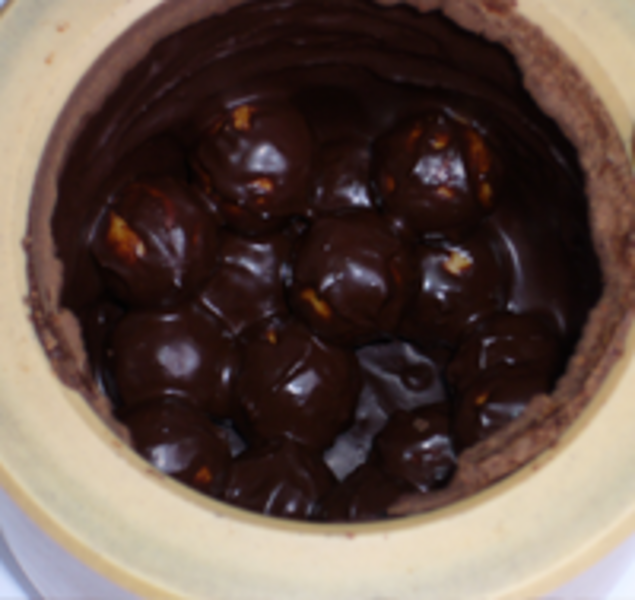
      then the Planetary-Ball Mill PULVERISETTE 6 classic line is the solution. With this instrument, in an extremely short amount of time, an absolute homogenous mass can be obtained.   In the example the 250 ml zirconium oxide grinding set equipped with 20 mm balls was used. 50 g weighed-in-quantity is after 2 minutes the most beautiful chocolate. The first look inside the opened grinding set leaves nothing to be desired in regards to the fineness and homogeneity. The high application of energy does influence the sensory testing though.

      Now the following task: Processing amounts of 2 kg maximum in a manner, so they could be further processed in the experimental lab into a chocolate mass

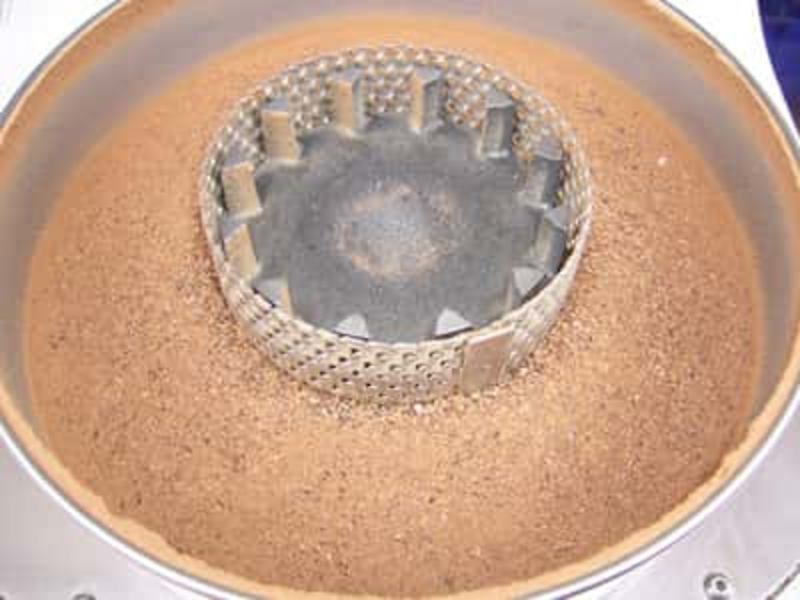
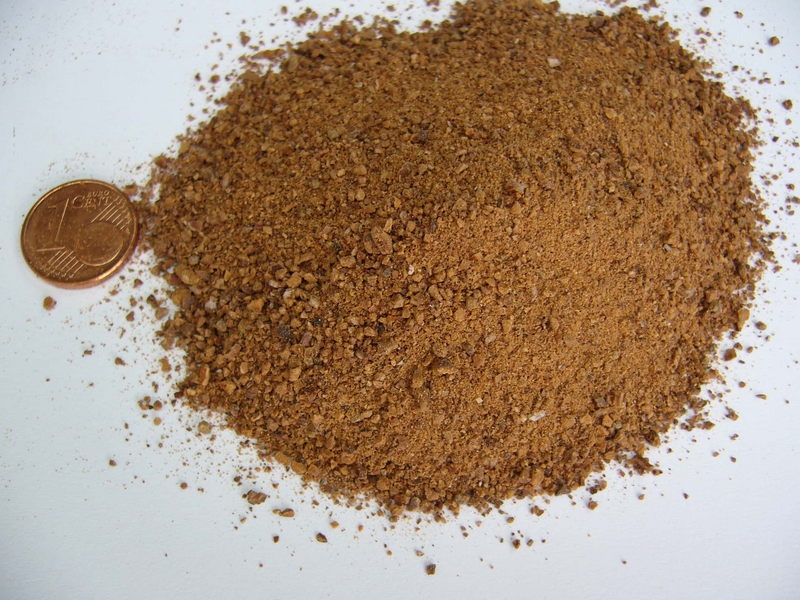
      The request was to grind the nibs down to a preferably fine pourable powder. The two first mentioned mills can be eliminated based on the desired final product. Therefore the Variable-Speed-Rotor Mill PULVERISETTE 14 was chosen for this task. 100 g nibs were comminuted in less than a minute. Utilized was a 2 mm sieve. A glance into the open grinding chamber shows, that there is still enough room for additional material.


      In order to obtain the required amount of 2 kg either you have to work batch wise or the instrument has to be equipped with the conversion-kit for the comminution of large quantities.

      The obtained fineness is sufficient enough though. The material becomes even finer, when sieved through a 2 mm sieve. A comminution by using the 1 mm sieve is unsuccessful.

      Tests to additionally increase the fineness by mixing with dry ice were not carried out. This would be a promising approach though to obtain an even finer, pourable powder in this manner.

      Downloads / Grinding reports / Links

      Download the FRITSCH-report as PDF-file

      Processing cocoa beans in the laboratory


      Detailed grinding reports

      Cocoa

      back

    • Enlaces directos
    • Login
    • Contacto
    • CGV
    • Información legal
    • Recomendar página
    • Imprimir
    • Preparación de muestras
    • Medición de partículas
      • Contacto / servicio técnico / noticias


        Contacto

        Asesoramiento de aplicaciones

        Soporte técnico

        Contacto en todo el mundo


        Servicio técnico

        Asesoramiento de aplicaciones

        Soporte técnico

        Su aplicación - nuestra solución

        Buscador de productos

        Protocolos de molienda

        Preparación de muestras gratuita

        Contacto en todo el mundo

        Descargas

        Garantía online

        Certificados de calidad


        Actualidad

        Noticias

        Roadshows

        Workshops

        Ferias

      • Productos para la preparación de muestras


        Molienda

        Molinos planetarios

        Molinos de bolas

        Molinos a cuchillas

        Molinos de rotor y de martillos

        Trituradores de mandíbulas / molinos de discos

        Morteros


        Tamizado

        Tamizador por vibración

        Tamizador vibratorio de alta carga


        División / distribución / limpieza

        Divisores de muestras

        Canaletas de distribución

        Baños de ultrasonidos

      • Productos para la medición de partículas


        Difracción láser

        Amplio rango de medición 0,08 – 2000 µm

        Unidad de medición

        Dispersión en húmedo

        Dispersión en seco

        Tubo de caída libre

        Dispersión en húmedo de pequeñas cantidades

        Software


        Amplio rango de medición 0,01 – 2000 µm

        Unidad de medición

        Dispersión en húmedo

        Dispersión en seco

        Tubo de caída libre

        Dispersión en húmedo de pequeñas cantidades

        Software


        Dispersión de luz dinámica DLS:

        Amplio rango de medición 1 nm – 6 µm

      • Enlaces


        Otras dominios

        www.fritsch-milling.com

        www.fritsch.de

        www.fritsch-france.fr

        www.fritsch.com.ru

        www.fritsch-italy.it

        www.fritsch.com.sg

        www.fritsch.cn

        www.fritsch.jp

        www.fritsch.kr


        www.fritsch-sizing.es

        www.fritsch-sizing.com

        www.fritsch-sizing.de

        www.fritsch-sizing.fr

        www.fritsch-sizing.ru

        www.fritsch-sizing.it

        www.fritsch-sizing.com.sg

        www.fritsch-sizing.cn

        www.fritsch-sizing.jp

        www.fritsch-sizing.co.kr

    • Para visitantes ya registrados

      Introduzca su dirección de correo electrónico y contraseña:

      ¿Ha olvidado su contraseña?

    • Please complete the form below for your account: